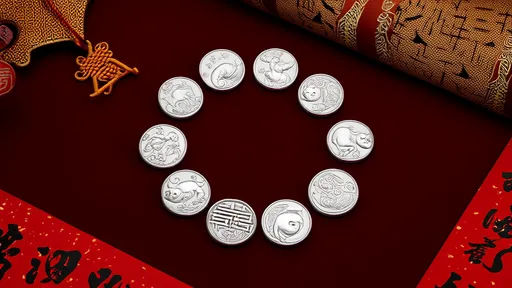
In the heart of Beijing's bustling Liulichang cultural district, a tradition has been quietly unfolding for nearly two decades. Caibai Jewelry's annual Lunar New Year silver bar series has become more than just precious metal investment—it has transformed into a cultural touchstone for collectors and families across China. What began as a simple commemorative item in 2004 has evolved into an anticipated annual ritual, marking the passage of time through the elegant lens of Chinese zodiac symbolism.
The journey started with the Year of the Monkey in 2004, when Caibai—a time-honored brand established in 1956—first ventured into creating zodiac-themed silver bars. Few could have predicted that this initial offering would blossom into a 19-year legacy, becoming one of the most consistently produced and collected zodiac silver series in China. The project emerged during a period when China's precious metals market was beginning to embrace artistic and cultural elements beyond pure bullion value.
Each year, the design process begins almost immediately after the previous year's bar has been released. A team of master designers and cultural consultants spends months researching historical representations of the upcoming zodiac animal, studying everything from ancient artifacts to folk art traditions. The challenge lies in balancing traditional symbolism with contemporary aesthetic sensibilities, creating pieces that feel both timeless and relevant to modern collectors.
The technical execution involves sophisticated minting techniques that have evolved significantly over the past two decades. Early editions utilized relatively simple stamping methods, while recent releases incorporate advanced technologies like high-relief striking, frost finishing, and intricate texturing. This technological evolution mirrors China's growing sophistication in precious metal craftsmanship, with each year's production benefiting from accumulated experience and improved equipment.
What makes the series particularly remarkable is its consistency in quality and vision across nineteen consecutive years. Through economic fluctuations, changing consumer preferences, and even global pandemics, Caibai has never missed a release. This reliability has built tremendous trust among collectors, many of whom now view completing the full set as a multi-generational family project. The series has become a metallic chronicle of early 21st-century China, capturing subtle shifts in design preferences and technical capabilities.
The cultural significance extends far beyond mere collectibility. In Chinese tradition, silver represents purity and value, while the zodiac animals carry deep symbolic meanings. The combination creates powerful cultural artifacts that many families purchase for newborn children, wedding gifts, or as annual prosperity symbols. The bars frequently appear during Lunar New Year celebrations, displayed alongside other traditional decorations as embodiments of good fortune and family continuity.
Market response has been overwhelmingly positive throughout the series' history. Early editions, particularly the 2004 Monkey and 2005 Rooster bars, have seen significant appreciation in the secondary market. However, most collectors report little interest in selling, preferring instead to maintain complete sets. This collector loyalty has created a stable market unusual in the often-volatile world of precious metal collectibles.
Production numbers have carefully balanced accessibility with exclusivity. While exact mintages vary by year, Caibai has maintained a policy of limited production runs that satisfy demand without diluting the series' special status. This careful market management has prevented the boom-and-bust cycles that often plague collectible series, ensuring steady value retention across all editions.
The design evolution tells its own fascinating story. Early bars featured relatively simple, emblematic representations of the zodiac animals. Over time, designs have grown more narrative and complex, often incorporating background elements that tell stories from Chinese mythology or folklore related to each animal. The recent Year of the Tiger bar, for instance, depicted the creature mid-roar against a mountainous landscape, conveying both the animal's power and its natural majesty.
Packaging and presentation have similarly evolved. What began as simple plastic capsules has transformed into elaborate presentation boxes accompanied by numbered certificates of authenticity and historical context about both the zodiac animal and that year's design inspiration. This attention to the complete collector experience demonstrates Caibai's understanding that they're selling not just silver, but pieces of cultural heritage.
The series has also reflected broader trends in China's collector market. The growing interest in culturally significant precious metal items, the rise of middle-class disposable income for luxury goods, and increasing appreciation for domestic brands with heritage credentials—all these trends find expression in the evolving reception and perception of the annual zodiac bars.
Looking toward the future, the series faces both challenges and opportunities. With nineteen years already completed, the collection approaches the significant twenty-year milestone. Collectors speculate about special editions or modified formats that might mark this anniversary. Meanwhile, younger collectors are discovering the series, often starting with the current year's bar before seeking out earlier editions to complete their sets.
Caibai has remained characteristically discreet about long-term plans for the series, though company representatives have hinted that they view it as an ongoing project rather than one with a predetermined endpoint. This suggests that future generations may look back on the series as a century-long project, creating an unprecedented numismatic record of Chinese cultural expression through the zodiac tradition.
The impact on Caibai's brand identity cannot be overstated. While the company maintains diverse jewelry and precious metal operations, the zodiac series has become its most publicly recognizable product line. The annual release generates significant media attention and foot traffic to Caibai stores, creating collateral benefits for their broader product range. More importantly, it has positioned Caibai as a custodian of Chinese cultural traditions in precious metal form.
Beyond commercial success, the series represents something increasingly rare in modern consumer culture: a product line driven primarily by cultural preservation rather than market trends. In an era of rapid change and disposable goods, the consistent annual appearance of these silver bars provides a touchstone of continuity and tradition. They serve as tangible connections to cultural roots in a society undergoing dramatic transformation.
As the series approaches its second decade, it stands as a remarkable achievement in sustained cultural craftsmanship. The nineteen zodiac silver bars produced to date form not just a collection of precious metal objects, but a continuous artistic dialogue with Chinese cultural heritage. They represent both the stability of tradition and the evolution of artistic expression, captured in 99.9% pure silver year after year.
For collectors, the series has become more than the sum of its parts. Complete sets tell a story not just of twelve-year zodiac cycles, but of nearly twenty years of Chinese cultural and economic history. They capture moments in a nation's journey, frozen in silver and awaiting future generations who will understand their full significance as both art objects and cultural artifacts from a specific period in China's development.
The true legacy of Caibai's zodiac silver bar series may ultimately lie in its demonstration that commercial products can successfully carry cultural meaning across generations. In maintaining quality, vision, and cultural authenticity for nineteen consecutive years, Caibai has created a template for how traditional symbols can find new life and meaning in modern contexts, ensuring that ancient traditions continue to resonate with contemporary audiences.
By /Oct 16, 2025
By /Oct 17, 2025
By Daniel Scott/Oct 16, 2025
By Emma Thompson/Oct 16, 2025
By /Oct 16, 2025

By /Oct 16, 2025
By /Oct 17, 2025

By /Oct 17, 2025

By /Oct 16, 2025
By Christopher Harris/Oct 16, 2025

By /Oct 16, 2025
By /Oct 17, 2025

By Thomas Roberts/Oct 16, 2025
By /Oct 17, 2025
By /Oct 17, 2025
By /Oct 17, 2025
By /Oct 16, 2025
By /Oct 17, 2025

By /Oct 17, 2025

By /Oct 17, 2025
