In the bustling jewelry districts of Shanghai and Beijing, a quiet revolution is taking place. Where once consumers flocked to purchase precious metals and gemstones based primarily on material value, today's shoppers are increasingly drawn to something less tangible but more personal: design. This fundamental shift from buying materials to buying creativity represents one of the most significant transformations in China's jewelry market in decades.
The traditional Chinese jewelry buyer would typically enter a store asking about gold purity, diamond carat weight, or jade quality. Material value served as both investment security and status symbol, with design often taking a backseat to intrinsic worth. This mindset dominated consumer behavior for generations, creating a market where craftsmanship mattered less than the raw materials being crafted.
Today, that paradigm has flipped. Walk into any modern jewelry boutique in China's first-tier cities, and you'll hear different questions: "Can you customize this piece?" "What's the story behind this design?" "Does this reflect traditional Chinese aesthetics?" The conversation has shifted from weight and purity to meaning and identity, marking a profound change in how Chinese consumers relate to personal adornment.
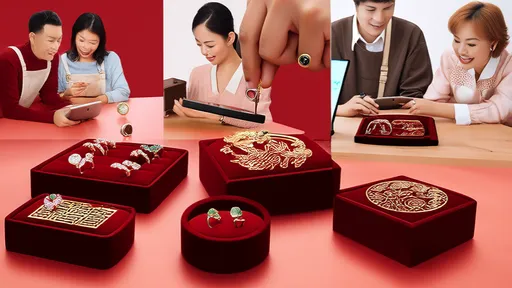
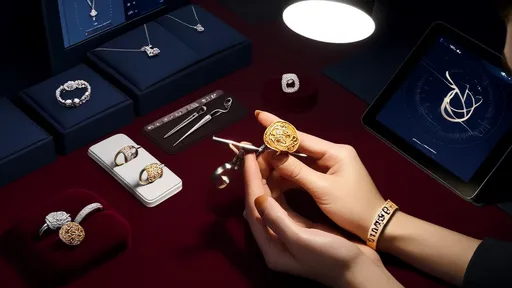
Customization sits at the heart of this transformation. Where mass-produced jewelry once dominated the market, personalized pieces now command premium prices and consumer attention. The demand for bespoke jewelry has grown exponentially, particularly among millennials and Gen Z consumers who view jewelry as an extension of personal identity rather than mere decoration or investment.
Local designers report waiting lists stretching months for custom pieces, with clients willing to pay significantly more for unique creations than they would for standardized items of higher material value. This represents a complete reversal of traditional valuation metrics in the jewelry industry.
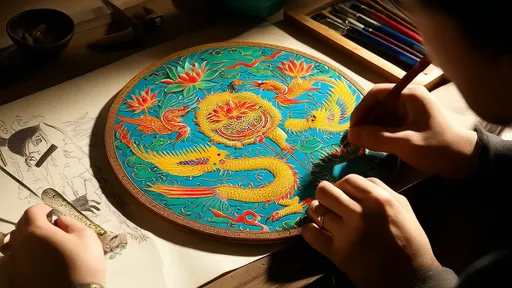
The rise of Chinese cultural confidence has fueled another parallel trend: the explosive growth of "Guochao" or "National Trend" in jewelry design. This movement embraces traditional Chinese elements, reinterpreting them through contemporary design sensibilities. From cloud patterns inspired by ancient porcelain to modern takes on traditional hairpin designs, Guochao jewelry connects wearers to cultural heritage while allowing for personal expression.
Designers working within the Guochao framework are careful to avoid mere replication of historical pieces. Instead, they deconstruct traditional motifs and reconstruct them with modern aesthetics, creating pieces that feel both timeless and contemporary. This approach has proven particularly appealing to younger consumers seeking to express cultural pride without sacrificing modern style sensibilities.
Social media platforms have accelerated both trends dramatically. Platforms like Xiaohongshu and Douyin have become virtual galleries where designers showcase custom pieces and consumers share their Guochao finds. The visual nature of these platforms makes them ideal for jewelry discovery and inspiration, creating communities around specific designers and aesthetic movements.
Influencers sharing their custom jewelry journeys—from initial design concepts to finished pieces—have demystified the customization process for millions of followers. Similarly, Guochao jewelry often goes viral when worn with both traditional and modern fashion, demonstrating its versatility and cultural relevance.
The material-to-design shift reflects broader changes in Chinese consumer psychology. As disposable incomes have risen and basic material needs have been met, consumers increasingly seek products that provide emotional and psychological satisfaction rather than mere functional utility. Jewelry has become a medium for self-expression, storytelling, and cultural connection.
This psychological shift has been particularly pronounced among younger consumers who grew up during China's economic boom. Having never experienced material scarcity, they approach consumption differently than previous generations, valuing experiences and personal meaning over pure material accumulation.
Market data confirms the trend's significance. Custom jewelry services have grown at approximately 30% annually over the past three years, far outpacing the broader jewelry market's growth. Similarly, searches for Guochao jewelry have increased over 400% on major e-commerce platforms since 2020, indicating strong and sustained consumer interest.
Traditional jewelry retailers have been forced to adapt quickly. Major chains that once emphasized their gold purity certifications and gemstone quality now highlight their design teams and customization services. Many have established separate Guochao collections and hired younger designers specifically to capture this growing market segment.
The adaptation hasn't been seamless. Some established retailers struggle to balance their traditional focus on material quality with the new emphasis on design innovation. However, those who have successfully navigated this transition report attracting younger demographics and achieving higher profit margins on designed-focused pieces.
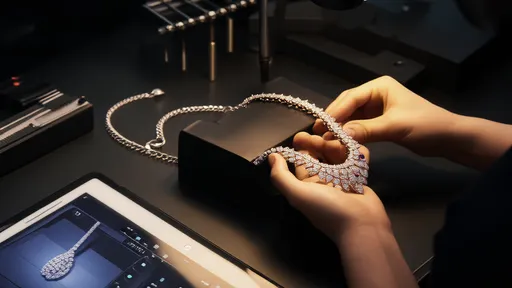
Technology has enabled much of this transformation. Advanced CAD software allows designers to create intricate custom pieces with precision impossible through traditional sketching methods. 3D printing enables rapid prototyping, reducing the time between design conception and physical realization from weeks to days.
Augmented reality applications now let customers virtually try on custom pieces before commissioning them, reducing the perceived risk of bespoke purchases. These technological advancements have made customization more accessible and less intimidating for average consumers.
The environmental angle has also contributed to the trend's momentum. Younger consumers increasingly question the ethics of traditional mining and the environmental impact of extracting new materials. Custom jewelry often incorporates recycled metals and existing family stones, appealing to environmentally conscious shoppers.
Similarly, Guochao pieces frequently draw inspiration from nature and traditional Chinese environmental philosophy, creating another layer of appeal for consumers concerned about sustainability. This alignment with environmental values has helped both trends gain traction among socially conscious demographic groups.
Looking forward, industry experts predict the material-to-design shift will only accelerate. As Chinese consumers become more sophisticated and confident in their aesthetic preferences, the demand for personalized, culturally resonant jewelry will likely grow. The jewelry market appears to be permanently restructuring around design rather than material value as its primary differentiator.
This represents a fundamental redefinition of what constitutes "value" in jewelry. Where previous generations measured value primarily in carats and purity, contemporary consumers increasingly measure it in uniqueness, cultural significance, and personal meaning. This recalibration of value metrics may represent the most lasting impact of the current transformation.
The implications extend beyond consumer behavior to manufacturing, retail, and even education. Jewelry schools report increased enrollment in design programs, while manufacturing facilities invest in technology that supports small-batch custom production rather than mass manufacturing. The entire industry ecosystem is reorganizing around the new design-centric paradigm.
For international jewelry brands hoping to succeed in the Chinese market, understanding this shift is crucial. Simply offering high-quality materials is no longer sufficient—brands must demonstrate design innovation, cultural sensitivity, and customization capabilities to compete effectively. Many international players have established dedicated design teams focused specifically on creating pieces for the Chinese market.
The convergence of customization and Guochao represents perhaps the most exciting development in the space. Designers are increasingly creating custom pieces that incorporate traditional Chinese elements in personalized ways, allowing consumers to express both individual identity and cultural belonging simultaneously. This fusion of the personal and the cultural may define the next phase of China's jewelry evolution.
As the market continues to evolve, one thing seems certain: the era of buying jewelry primarily for its material worth has passed. The future belongs to designs that tell stories, express identities, and connect wearers to culture and community. In China's jewelry shops, creativity has become the most precious commodity of all.
By /Oct 16, 2025
By /Oct 17, 2025
By Daniel Scott/Oct 16, 2025
By Emma Thompson/Oct 16, 2025
By /Oct 16, 2025

By /Oct 16, 2025
By /Oct 17, 2025

By /Oct 17, 2025
By /Oct 16, 2025
By Christopher Harris/Oct 16, 2025
By /Oct 16, 2025
By /Oct 17, 2025
By Thomas Roberts/Oct 16, 2025
By /Oct 17, 2025
By /Oct 17, 2025
By /Oct 17, 2025
By /Oct 16, 2025
By /Oct 17, 2025

By /Oct 17, 2025
By /Oct 17, 2025
