In the grand tapestry of human artistic expression, few mediums possess the luminous allure and cross-cultural resonance of enamel art. From the sun-baked banks of the Nile to the imperial workshops of the East, this ancient craft of fusing vitreous glaze to metal has embarked on a remarkable journey, continually reinventing itself across millennia. Today, under the expansive lens of a globalized world, enamel is experiencing a profound renaissance, shedding its traditional confines and boldly expanding its application boundaries into uncharted territories of design, technology, and conceptual art.
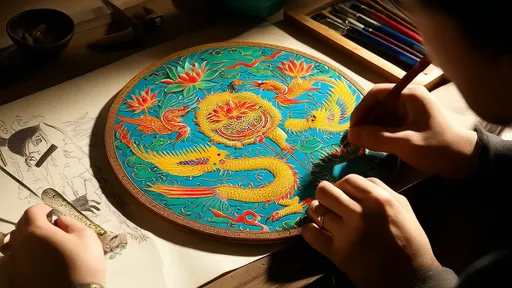
The story of enamel is one of parallel evolution. In ancient Egypt, as early as the Middle Kingdom, artisans mastered the technique of inlaying cloisonné enamel into gold and precious stones, creating dazzling pectorals and ceremonial objects for the pharaohs. These artifacts, intended for eternity, shimmered with the blues of lapis lazuli and the greens of the Nile, their brilliance meant to reflect the divine radiance of the gods. Simultaneously, and with no known cultural exchange, a parallel tradition was flourishing in the ancient Mediterranean and, later, with extraordinary sophistication, in China. The Chinese mastery of cloisonné, and later painted enamel, reached its zenith during the Ming and Qing dynasties, producing vases, censers, and screens of breathtaking complexity. These objects were not merely decorative; they were statements of power, cosmology, and technical prowess, their surfaces depicting intricate dragons, phoenixes, and landscapes that spoke to a deep philosophical and aesthetic tradition.
For centuries, these two great streams of enamel artistry—the Egyptian-Mediterranean and the Eastern—developed along distinct cultural trajectories. The West perfected techniques like champlevé and painted enamel on copper, often in the service of religious reliquaries and portraiture. The East honed cloisonné into a national art form, its vibrant, jewel-like quality becoming synonymous with imperial splendor. The paths rarely crossed, each tradition a self-contained universe of mastery. However, the dawn of the modern era and the subsequent forces of globalization began to dissolve these ancient boundaries. The 19th and 20th centuries saw a cross-pollination of ideas, as Western artists and collectors became enamored with Oriental art, and Eastern craftsmen incorporated Western stylistic elements.
This historical convergence has set the stage for the current, dynamic phase of enamel's evolution. The global perspective is no longer about mere influence; it is about a fundamental re-imagining of the medium's identity and potential. Contemporary artists and designers, armed with a deep respect for historical techniques but unburdened by their traditional applications, are pushing enamel into startling new dimensions. We are witnessing the emergence of what can only be called a transnational enamel language, one that freely borrows from the minimalist aesthetics of Scandinavian design, the bold color fields of American abstract expressionism, and the intricate narrative traditions of its own Eastern and Middle Eastern heritage.
One of the most significant boundary expansions is in the realm of scale and architectural integration. Enamel is no longer confined to the vitrine or the jewelry box. Pioneering studios are now creating large-scale enamel panels for building facades, interior walls, and public art installations. The durability of modern industrial enamel, combined with its unparalleled color stability and resistance to weathering, makes it an ideal medium for urban landscapes. Imagine a skyscraper's lobby adorned with a vast, shimmering enamel mural that draws its color palette from ancient Egyptian tomb paintings, or a subway station whose walls are lined with enamel tiles depicting scenes inspired by Chinese landscape scrolls. This is not futuristic speculation; it is happening now, as architects and artists collaborate to bring the depth and luminosity of this ancient craft into our daily civic experience.
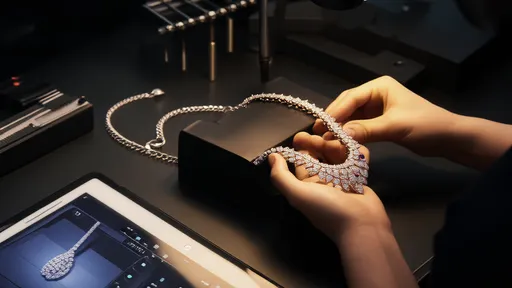
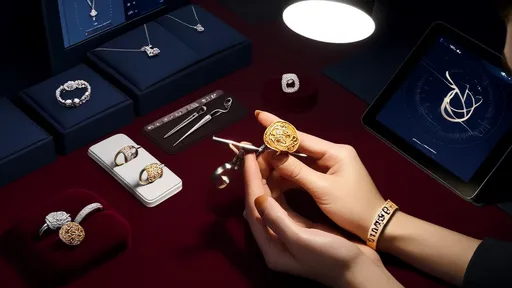
Furthermore, the dialogue between enamel and technology is forging entirely new creative pathways. Digital design tools allow artists to create patterns of impossible complexity, which are then translated into enamel work using techniques like photo-etching and laser-cut cloisons. Some avant-garde creators are even embedding electronic components within enamel pieces, creating interactive art that lights up or responds to touch, thus merging a centuries-old craft with the pulse of the digital age. The material science of enamel itself is also advancing. Researchers and artists are experimenting with new chemical compositions to achieve previously impossible textures, transparencies, and even thermo-chromatic properties, where the color of the enamel changes with temperature.
The world of high fashion and luxury design has been particularly receptive to this globalized enamel revival. Leading jewellery houses, which have long cherished enamel for its color, are now commissioning pieces that explicitly reference this cross-cultural history. A single brooch might feature the precise, geometric patterns reminiscent of Egyptian art alongside the fluid, organic forms of Chinese painted enamel, all executed with contemporary flair. Beyond jewellery, enamel is appearing on high-end timepieces, writing instruments, and even technological accessories like smartphone cases, asserting that beauty and craftsmanship have a place in the modern digital uniform.
Perhaps the most profound expansion is occurring on a conceptual level. Contemporary artists are using enamel to explore themes of cultural memory, globalization, and the passage of time. An artwork might layer imagery from Egyptian hieroglyphs over modern infographics, all rendered in enamel, to comment on the evolution of communication. Another might use the fragile, glassy surface of enamel as a metaphor for the fragility of cultural heritage in a homogenizing world. By doing so, they are elevating enamel from a decorative craft to a potent medium for critical discourse, connecting its ancient, material history with the pressing questions of our present.
In conclusion, the journey of enamel art from the tombs of the pharaohs and the palaces of the East to the forefront of global contemporary practice is a testament to its enduring power and adaptability. It is a medium that has successfully navigated the transition from sacred object to secular luxury, and now, to a versatile tool for architectural, technological, and conceptual innovation. The global vision for enamel is not one of erasing its rich and diverse origins, but rather of weaving those origins into a new, more complex and interconnected narrative. As artists continue to explore its luminous possibilities, enamel stands as a brilliant, molten thread connecting our past, present, and future, proving that some arts do not fade with time—they simply learn to shine in new light.
By /Oct 16, 2025

By /Oct 17, 2025

By Daniel Scott/Oct 16, 2025

By Emma Thompson/Oct 16, 2025
By /Oct 16, 2025

By /Oct 16, 2025
By /Oct 17, 2025

By /Oct 17, 2025

By /Oct 16, 2025

By Christopher Harris/Oct 16, 2025

By /Oct 16, 2025
By /Oct 17, 2025

By Thomas Roberts/Oct 16, 2025

By /Oct 17, 2025
By /Oct 17, 2025
By /Oct 17, 2025
By /Oct 16, 2025
By /Oct 17, 2025

By /Oct 17, 2025

By /Oct 17, 2025
