The windswept moors of literary Yorkshire have found an unexpected but compelling new home in the fashion world. For its latest collection, the esteemed Italian house Max Mara has cast its discerning eye not towards the sun-drenched piazzas of its homeland, but to the brooding, atmospheric landscapes of 19th-century English literature. Drawing profound inspiration from the seminal works of the Brontë sisters—Charlotte's Jane Eyre and Emily's Wuthering Heights—the brand has masterfully translated the raw emotional power, Gothic romance, and fierce independence of these novels into a modern sartorial language. This is not a collection of mere costume or pastiche; it is a deep, philosophical exploration of character, setting, and spirit, rendered in the house's signature lexicon of luxurious fabrics and architectural silhouettes.
The connection between the stark, untamed beauty of the Yorkshire moors and Max Mara's core identity is more intuitive than it might initially appear. For decades, the brand has built its reputation on creating clothing that is both a fortress and a sanctuary for the modern woman—garments that offer protection, confidence, and an unwavering sense of self. This is the very essence of the heroines at the heart of the Brontës' narratives. The collection, therefore, becomes a dialogue between two different forms of empowerment: one literary and historical, the other material and contemporary. It speaks to a woman who, like Jane Eyre, possesses an unshakeable moral and intellectual core, and who, like Catherine Earnshaw, is driven by wild, untamable passions, albeit channeled through a lens of sophisticated modernism.
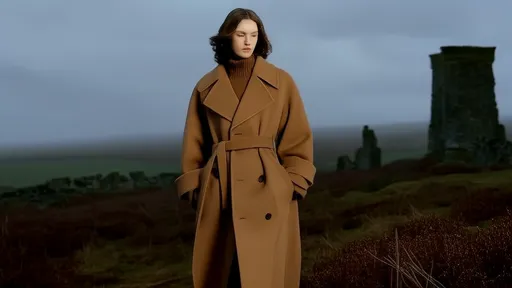
Walking into the presentation space, one is immediately enveloped in an atmosphere that is palpably Brontëan. The air feels charged with a quiet drama. The colour palette is drawn directly from the earth and sky of the novels' settings: deep, peaty browns, murky heather greys, the faded green of lichen-covered stone, and the stark, luminous white of a winter sky. There are flashes of crimson, reminiscent of the fire in the hearth at Thrushcross Grange or the raw passion that simmers beneath the surface of the characters. These are not bright, cheerful colours; they are complex, moody, and deeply resonant, suggesting a world where emotion and landscape are inextricably linked.
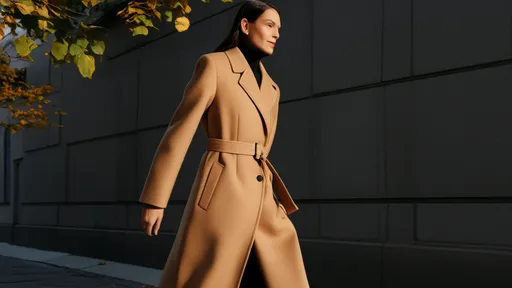
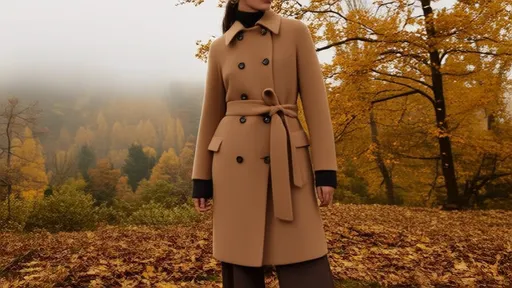
The textures employed throughout the collection are a testament to Max Mara's unparalleled expertise with materials. Here, the fabric tells the story. Heavy, double-faced wool coats, reminiscent of the sturdy garments needed to brave the moorland winds, are a central pillar. Their weight and structure provide a sense of armor, a theme that directly echoes Jane Eyre's need for emotional and physical resilience. Conversely, we see fluid, cascading cashmere in the form of elegant dresses and wide-leg trousers. This represents a different kind of strength—one that is fluid, adaptable, and soft yet unyielding, much like Jane's quiet determination. Tweed appears, not as a prim country-club fabric, but rough-hewn and nubby, evoking the very turf and grit of the moors underfoot. There are also delicate, almost ghostly layers of chiffon and georgette, suggesting the ethereal presence of Catherine's spirit on the wind, a beautiful and haunting fragility amidst the collection's robust foundations.
Silhouettally, the collection masterfully balances structure and release, mirroring the central conflict between societal constraint and wild desire in both novels. The sharp, tailored lines of a double-breasted blazer or a precisely cut coat reflect the rigid class structures and moral codes of Victorian England. They speak of Gateshead Hall and the Lowood Institution, places where Jane was forced to conform. Yet, these structured pieces are often paired with, or interrupted by, elements of dramatic volume and softness. Capes, a direct reference to the practical outerwear of the era, are reimagined in sumptuous camel hair or wool, billowing behind the wearer with a theatrical, almost heroic flourish. High-necked blouses, a Victorian staple, are rendered in delicate silk, their severity softened by subtle gathers or intricate lace inserts, hinting at the passion concealed beneath a placid exterior.
Beyond the general mood, specific motifs from the narratives are cleverly and abstractly integrated. The idea of the wilderness and the walled garden is a recurring theme. Rough, uncut fringe on a shearling gilet mimics wild grasses; a jacquard pattern subtly suggests tangled thorn bushes. This is contrasted with more orderly, geometric patterns on a knit dress or a printed scarf, representing the cultivated, civilized world that constantly seeks to contain the wild spirit. The collection is rich with a sense of duality and haunting. A dress may feature a solid, structured bodice but a diaphanous, trailing skirt—the corporeal and the spectral in one garment. The play of light and shadow on the rich textures further enhances this Gothic sensibility, suggesting that beauty and mystery are often two sides of the same coin.
At its heart, this is a collection about the modern Brontë heroine. Max Mara is not simply dressing a character from a book; it is articulating a timeless archetype for today. The woman who wears these clothes carries with her the same independence, intelligence, and fierce will as Jane Eyre. She is pragmatic and principled, yet capable of profound love. She also possesses a touch of Catherine's untamed soul and raw emotional intensity, though she navigates the world with a contemporary composure and agency that her literary counterpart was denied. These clothes are her armor and her expression. They allow her to walk into a boardroom with the same resolve Jane had when she faced Mr. Rochester, and to command a landscape, urban or natural, with the same wild freedom Cathy felt on the moors.
The genius of this collection lies in its refusal to be literal. There are no corsets on the runway, no bonnets, no direct period replication. Instead, Max Mara has absorbed the emotional and thematic essence of its source material and alchemized it through the lens of its own iconic style. The result is a line of clothing that feels both timeless and urgently modern. It proves that great stories are not confined to the page; their echoes can be found in the drape of a coat, the texture of a wool, and the spirit of the woman who wears it. In weaving the threads of Jane Eyre and Wuthering Heights into its fabric, Max Mara has not only created a beautiful collection but has also crafted a powerful narrative about strength, passion, and the enduring power of a woman's spirit, solidifying its place not just as a fashion house, but as a storyteller for the ages.
By /Oct 23, 2025
By /Oct 23, 2025

By /Oct 22, 2025

By /Oct 23, 2025

By /Oct 23, 2025

By /Oct 22, 2025
By /Oct 23, 2025
By Eric Ward/Oct 22, 2025
By Natalie Campbell/Oct 22, 2025
By /Oct 22, 2025

By /Oct 23, 2025

By /Oct 31, 2025
By /Oct 23, 2025
By /Oct 22, 2025
By /Oct 22, 2025
By /Oct 22, 2025
By /Oct 23, 2025

By /Oct 23, 2025
By /Oct 23, 2025
By /Oct 22, 2025
