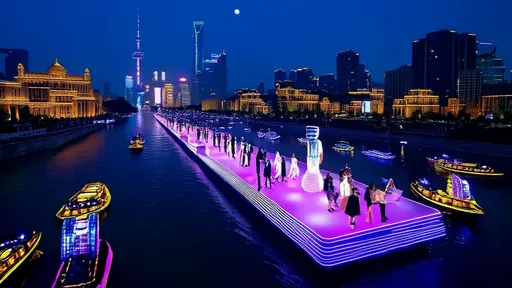
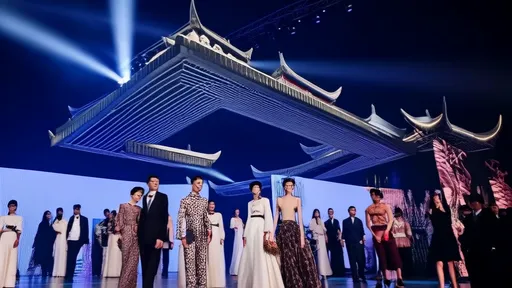
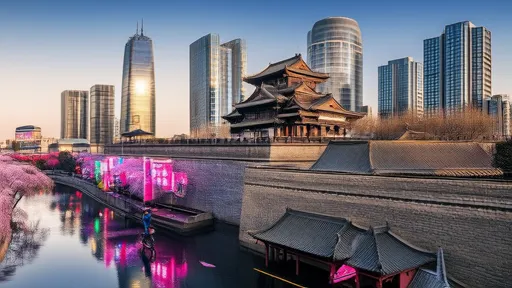
The Yangtze River, China's ancient waterway of commerce and culture, witnessed an unprecedented transformation last Friday evening as Nanjing Fashion Week unveiled its most ambitious project to date: a 150-meter runway floating upon its legendary waters. Against the dramatic backdrop of the city's illuminated skyline, with the silhouettes of modern skyscrapers standing beside historical landmarks, the "River Water Catwalk" didn't just present clothing—it staged a powerful statement about Nanjing's evolving identity in the global fashion landscape.
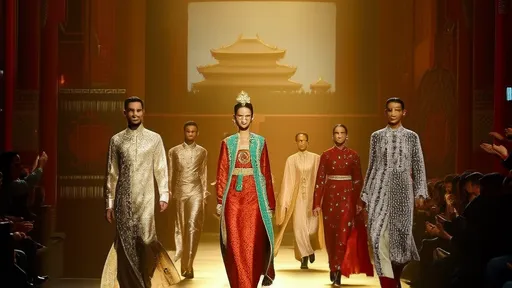
The air crackled with a mixture of anticipation and disbelief as the first models emerged from a specially constructed pavilion on the riverbank. Their footsteps echoed on the custom-engineered floating platform, a temporary structure that seemed to defy the river's current. The collection, titled "Confluence," was a masterful dialogue between Nanjing's profound history and its dynamic future. Silks embroidered with traditional Nanjing cloud patterns flowed alongside architectural, laser-cut leather, while deep indigo dyes, a nod to the city's textile heritage, were juxtaposed with iridescent, tech-driven fabrics that changed color under the strategic lighting.
This was far more than a fashion show; it was a meticulously choreographed spectacle designed to announce Nanjing's arrival as a serious contender in the world of design. The choice of venue was profoundly symbolic. The Yangtze River is the lifeblood of China, and for centuries, Nanjing has been one of its most crucial ports. By placing its fashion heartbeat directly on these waters, the city was making a bold claim: it is not looking inward, but outward, ready to export its unique aesthetic to the world. The gentle lapping of waves against the catwalk provided a natural, rhythmic soundtrack, reminding every guest that they were witnessing something deeply connected to the city's soul.
The creative director behind the opening show, the acclaimed Li Wei, spoke with palpable passion backstage. "We are not Shanghai, and we are not Beijing," he stated, wiping sweat from his brow despite the cool evening air. "Nanjing has a different energy. It is a city where scholars once composed poetry and emperors built their capitals. That depth of culture is our greatest asset. The 'River Water Catwalk' is our way of saying that our fashion is not created in sterile studios, but is drawn from the same wellspring as our history, our art, and our river." His words underscored a strategic departure from simply mimicking established fashion capitals, pointing instead toward a path of authentic, culturally-grounded innovation.
The logistical challenges of executing a show of this scale on a moving body of water were immense. A team of marine engineers worked for months with event planners to ensure the platform's stability and safety. The lighting rig, a complex web of hundreds of fixtures, had to be precisely calibrated to combat the reflective surface of the water and avoid blinding the audience on the opposite shore. Every garment was treated with water-resistant coatings, and models underwent specific training to walk confidently on a surface that had a slight, perceptible give. The success of the event was a testament not just to creative vision, but to formidable technical execution.
International buyers and press in attendance were visibly impressed. Eleanor Vance, a senior editor from a major European fashion magazine, was seen feverishly taking notes throughout the presentation. "I've been to fashion weeks on every continent," she remarked afterward, "but I have never seen a venue used with such powerful narrative intention. They aren't just showing clothes; they are telling the story of a city reborn. The craftsmanship in the collections is exceptional, but it's the overarching vision that is truly compelling. The world is always looking for the next source of authentic creativity, and Nanjing has just positioned itself squarely on that map."
Beyond the dazzling opening, Nanjing Fashion Week has structured a comprehensive program aimed at building a sustainable ecosystem. Over the next seven days, the event will host over fifty shows from both established Chinese designers and emerging talents. A dedicated "New Blood" section, located in a repurposed industrial warehouse, will spotlight graduates from Nanjing's own prestigious art and design academies, providing a crucial launchpad for the next generation. Furthermore, a concurrent business forum will connect local manufacturers with international distributors, focusing on the practicalities of building global fashion brands from this specific regional base.
The local government's support for this endeavor has been substantial and strategic. This investment is viewed not merely as funding for a cultural event, but as a key part of a broader economic development plan to cultivate a "soft power" industry. By fostering homegrown design talent, the city aims to move up the value chain, from being a center of garment production to becoming a recognized hub of design innovation and brand creation. The fashion week is the most visible and glamorous tip of a much larger, concerted effort to redefine the city's economic and cultural profile.
As the final model walked the length of the watery runway, pausing at the very end as if to gaze toward the horizon, the audience erupted in applause that seemed to ripple across the river itself. The sound mingled with the city's nocturnal hum, a fitting fusion of the event and its environment. The 150-meter "River Water Catwalk" was more than a successful opening; it was a declaration. It announced that Nanjing, with its rich tapestry of history and its eyes firmly on the future, is ready to weave its own distinct thread into the global fabric of fashion. The ambition was not just stated; it was spectacularly, unforgettably, worn.
By /Oct 23, 2025
By /Oct 23, 2025
By /Oct 22, 2025
By /Oct 23, 2025
By /Oct 23, 2025
By /Oct 22, 2025
By /Oct 23, 2025
By Eric Ward/Oct 22, 2025
By Natalie Campbell/Oct 22, 2025
By /Oct 22, 2025
By /Oct 23, 2025

By /Oct 31, 2025
By /Oct 23, 2025
By /Oct 22, 2025
By /Oct 22, 2025
By /Oct 22, 2025
By /Oct 23, 2025
By /Oct 23, 2025
By /Oct 23, 2025
By /Oct 22, 2025
